Anti-lag systems all aim to achieve the same outcome. This is to maintain boost pressure when the driver isn’t accelerating. However, the way they achieve this varies depending on the application, available engine management systems, and motorsport regulations. Below, we explore the most common types of anti-lag and how each one maintains high turbo speed under off-throttle conditions.
DSPS boast helping teams achieve multiple championship wins in IndyCar, WRC, Indy Lights,RallyX, Le Mans, WEC, GT Racing, DTM, SGT, WTCC, Dakar, and F1. Our 40-year history demonstrates our commitment to race engineering. In this blog, we explain the types of anti-lag valves and systems available, as well as which system may be best suited for your team.
Why Anti-Lag Exists
Turbo lag refers to the delay between pressing the throttle and the turbocharger producing full boost, typically caused by a momentary drop in exhaust flow. This delay is most noticeable after gear changes or when accelerating out of tight corners. In motorsport, even a fraction of a second lost to lag is unacceptable. Maintaining a continuous boost is essential for staying fast and competitive. To solve this, engineers developed anti-lag systems (ALS) that keep the turbo spinning between throttle lifts. Early systems were mechanical and very aggressive, while modern ECU-controlled ALS setups are far more refined, tunable, and suited to professional racing needs.
The Main Types of Anti-Lag Systems
Anti-lag systems fall into three main categories, each using a different method to keep the turbo spooled when the driver lifts off the throttle.
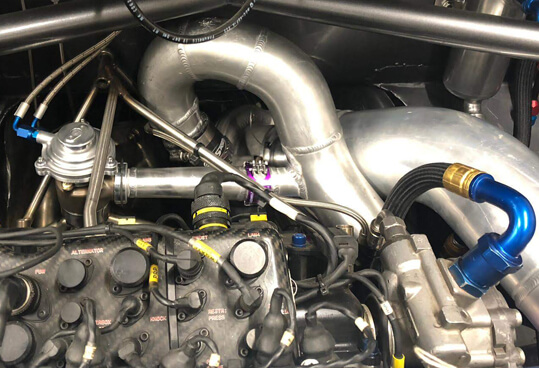
Bypass Anti-Lag Systems - Reroute air around the closed throttle body, maintaining airflow to the turbo, so it continues spinning. These setups rely on Anti-Lag Valves (ALVs) to control the bypass path, making them popular in rally and endurance racing where controlled, relatively gentle anti-lag is preferred.
Throttle Kick Anti-Lag - Works differently: the ECU commands the throttle to stay slightly open while injecting extra fuel and air. This creates small combustion events even when the throttle is off, generating the explosive pressure needed to keep the turbo spinning. It’s known for flames, loud bangs, and heavy component wear, and was widely used in older rally cars where instant response mattered more than long-term engine health.
Ignition Retard Anti-Lag - Delays ignition timing so combustion happens late—often in the exhaust manifold. This heats and drives the turbine without needing throttle input. It’s highly tunable, making it the most common modern approach to ALS in ECU-managed engines.
Each system has its own strengths, weaknesses, and ideal applications, with ALVs being most closely associated with bypass-based anti-lag setups.
Older Mechanical Systems vs Modern ECU-Managed Strategies
Older mechanical anti-lag systems were far simpler than today’s ECU-controlled strategies, but they were also far more brutal. Common in the 1980s and 1990s rallying, when we started up, especially Group B, these systems relied on crude throttle-bypass valves or ignition manipulation to keep the turbo spinning. They produced huge bangs, flames, and aggressive power delivery, but at the cost of extreme thermal and mechanical stress. Turbochargers suffered significantly, with shortened lifespans due to constant high temperatures and violent exhaust pulses. These early systems delivered instant response, but with little regard for component longevity or fine control.
Modern ECU-managed anti-lag systems take a far more sophisticated approach. Fully integrated digital control enables the ECU to adjust fuel, ignition timing, airflow, and turbo behaviour in real-time. Teams can tailor anti-lag for each stage or track, running aggressive settings for short circuits or smoother, more controlled setups for endurance racing. Anti-Lag Valves now play a significant role, enabling controlled airflow bypasses that maintain turbo speed without imposing the same level of stress on components.
Today’s systems aim to strike a balance between performance, reliability, and regulatory compliance. This evolution means anti-lag can be customised precisely to the demands of each team, track, or motorsport event, achieving instant response with far greater durability.
Where Anti-Lag Valves Fit Across Systems
Pros and Cons of each ALS type
Each type of anti-lag system comes with its own strengths and compromises.
Bypass ALS is generally the smoothest and most efficient option, using Anti-Lag Valves (ALVs) and ECU control to manage airflow when the throttle is closed. It offers a good response with reduced stress on components, but requires additional hardware and careful integration.
Throttle Kick ALS is the simplest to implement and delivers a highly aggressive response, keeping the turbo instantly alive. However, it is very hard on engines and turbos, generating tremendous heat, loud bangs, and emissions that make it unsuitable for road use.
Ignition Retard ALS is highly flexible due to ECU tuning and doesn’t require additional valves, but it produces extreme exhaust temperatures that can crack manifolds and shorten turbo life. There is no universally “best” ALS system; teams choose based on discipline, driving style, and hardware. Increasingly, ALV-based systems are favoured for precise control with reduced mechanical stress.
Different anti-lag designs suit different types of motorsport. Regardless of the system used, the goal remains constant. With the proper setup, anti-lag can significantly enhance throttle response and performance on the track or stage. To determine which anti-lag system is best for your engine, please contact us today. We offer a range of anti-lag valves and can direct you accordingly based on your specific goals and the type of motor racing you compete in. Please speak to our friendly team today!