In turbocharged engines, even the smallest components can significantly impact overall performance. Wastegates are a prime example. They play a crucial role.
They regulate the exhaust flow and manage boost pressure, helping to control power delivery.
They stabilise turbo operation and protect the engine from damaging levels of overboost. Here, we’ll outline how wastegates directly influence turbo response, boost control, and power output. We also discuss why understanding their function is essential for anyone looking to optimise turbocharger performance.
In our 40 years of experience working with the most competitive teams in the business, from Formula One to WRC and Le Mans, our experts at DSPS outline below in detail how wastegates affect turbo response.
The Role of Wastegates in Turbocharged Engines
Wastegates play a fundamental role in turbocharged engines by regulating the flow of the exhaust gases that drive the turbocharger. Their primary function is to prevent the turbo from spinning too fast by diverting excess exhaust energy away from the turbine once the desired boost pressure is reached. This keeps the system operating safely and prevents damaging levels of overboost.
However, a wastegate’s influence goes far beyond simply capping boost. By controlling how and when exhaust flow is released, wastegates shape the overall power delivery of the engine. They directly affect several things: how quickly boost builds, how smoothly power is delivered, and how consistently the engine performs under different loads. In high-performance setups, precise wastegate control becomes essential for achieving strong, responsive, and predictable turbo behaviour. In short, wastegates play a crucial role in balancing performance, efficiency, and engine safety.
Key Factors Influencing Performance
Several factors determine how effectively a wastegate controls boost and its influence on overall turbo performance. The first is valve size. Larger wastegate valves can handle higher exhaust flow, making them ideal for big turbochargers or low/medium-boost applications where excess gas must be diverted quickly.
Smaller valves, on the other hand, provide faster control response and are often preferred in setups where sharp boost regulation is essential.
Another crucial factor is the spring rate inside the wastegate. This spring establishes the base boost pressure before any external controller or solenoid intervenes. A spring that is too soft can lead to unstable boost levels and poor control, while a spring that is too stiff may delay wastegate opening, affecting turbo response, and increasing the risk of overboost.
Finally, the actuation method plays a significant role. Mechanical or pneumatic wastegates rely solely on boost pressure, whereas electronic systems, controlled by an ECU or solenoid, allow for far more precise and dynamic regulation. Electronic actuation is particularly advantageous in racing and high-performance environments where fine-tuned boost control is essential.
Turbo Response and Power Delivery
Turbo response depends heavily on how the wastegate is configured. Exhaust gases need to reach the turbine at the right time and in the right volume. When the wastegate is working correctly, the turbo stays in its optimal operating range and boost pressure builds without hesitation. The result is an engine that reacts quickly when the throttle is pressed, rather than one that feels slow to respond.
Stable valve operation also makes a noticeable difference in how power is delivered. As the wastegate opens and closes at the intended pressure levels, boost builds in a controlled way instead of arriving suddenly. Power delivery becomes smoother and easier to manage, which improves both everyday drivability and overall performance.
Problems start to appear when the system isn’t calibrated properly. Slow spool-up can make the engine feel flat at lower revs while the turbo struggles to build pressure. In other cases, the opposite happens: the boost arrives too aggressively. Sudden surges in power can make the car harder to control and may place unnecessary stress on engine components. Careful tuning of the wastegate helps ensure the turbocharger behaves consistently across different driving conditions.
Boost Control Issues: Boost Creep and Boost Spike
Boost Creep
Boost creep happens when the wastegate cannot divert enough exhaust gas away from the turbine. Instead of stabilising at the intended boost level, pressure continues to rise as the turbo keeps accelerating. This situation often appears on setups with high-flow exhaust systems, larger turbochargers, or wastegates that are simply too small for the application.
Because the valve cannot bypass sufficient exhaust energy, boost pressure slowly climbs beyond the target figure. Over time, this creates an overboost condition that can place significant strain on the engine.
Boost Spike
A boost spike is slightly different. Rather than a gradual increase, it is a brief surge in boost pressure when the turbo spools faster than the wastegate can respond. Hard throttle inputs, stiff actuator springs, or delays in electronic control can all contribute to this behaviour. The result is a sudden overshoot in boost, which can make power delivery unpredictable and occasionally quite abrupt.
Prevention
Most of these issues can be avoided with the right hardware and setup. Correct wastegate sizing, appropriate spring rates, and properly calibrated actuation—whether mechanical or electronically controlled—allow the system to regulate boost accurately. With everything working together, pressure stays stable, and turbo performance remains consistent.
Motorsport and Tuning Applications
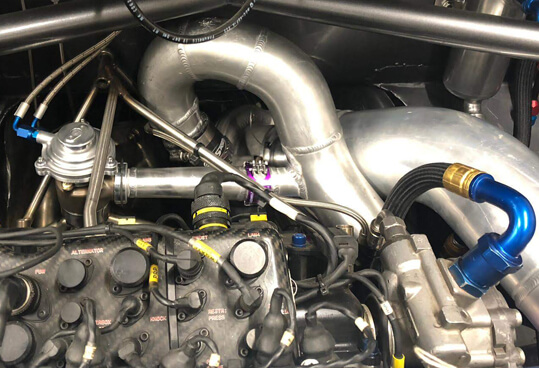
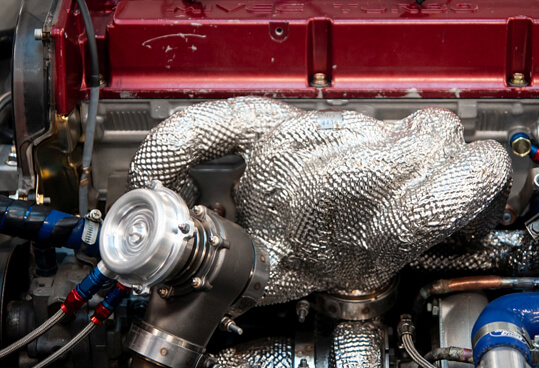
In motorsport environments such as drag racing or time attack, engines are pushed to very high boost levels for short periods of time. Maintaining control under those conditions requires hardware capable of handling large exhaust flow. For that reason, tuners frequently choose larger external wastegates. These units can divert far more exhaust gas than integrated systems, which helps keep boost levels predictable when turbochargers are operating near their limits.
Street and track-day cars usually follow a slightly different approach. Here, the goal is balance—strong performance without sacrificing reliability. Internal wastegates or smaller external units are commonly used to produce a smoother boost curve that suits daily driving as well as spirited use on the circuit.
Fine-tuning then becomes the final step. Adjustments to spring pressure, valve preload, and electronic boost control allow tuners to shape how the turbo behaves. With the right setup, boost arrives at the right moment, response improves, and the engine remains protected across a wide range of driving conditions.
Wastegates influence far more than simple boost limits. They shape turbo response, throttle feel, and overall power delivery. Choosing the right wastegate size, spring rate, and control method is crucial for optimising performance while maintaining the engine’s safety and reliability. If you want your setup optimised professionally, DSPS offers expert wastegate services to ensure your turbo system performs at its absolute best.
DSPS offer many types of wastegate products that can benefit your team.
DSPS offer many types of wastegate products that can benefit your team. Get in touch with us for more information on our precision engineering solutions.